Why I Stopped Taking “Just” Beautiful Photos
Over the last few years I've slowly stopped trying to take just beautiful photos. And if anything, the last month completely solidified that for me.
We've just completed thousands of miles across Canada. Through and amongst the kind of landscapes that make you question how on earth our planet can be so stunning — places I've wanted to see in real life since I discovered Google Image Search.
But when I got home and had the chance to properly sit down and look through a bigger selection of the images I shot, what I suspected would happen, happened.
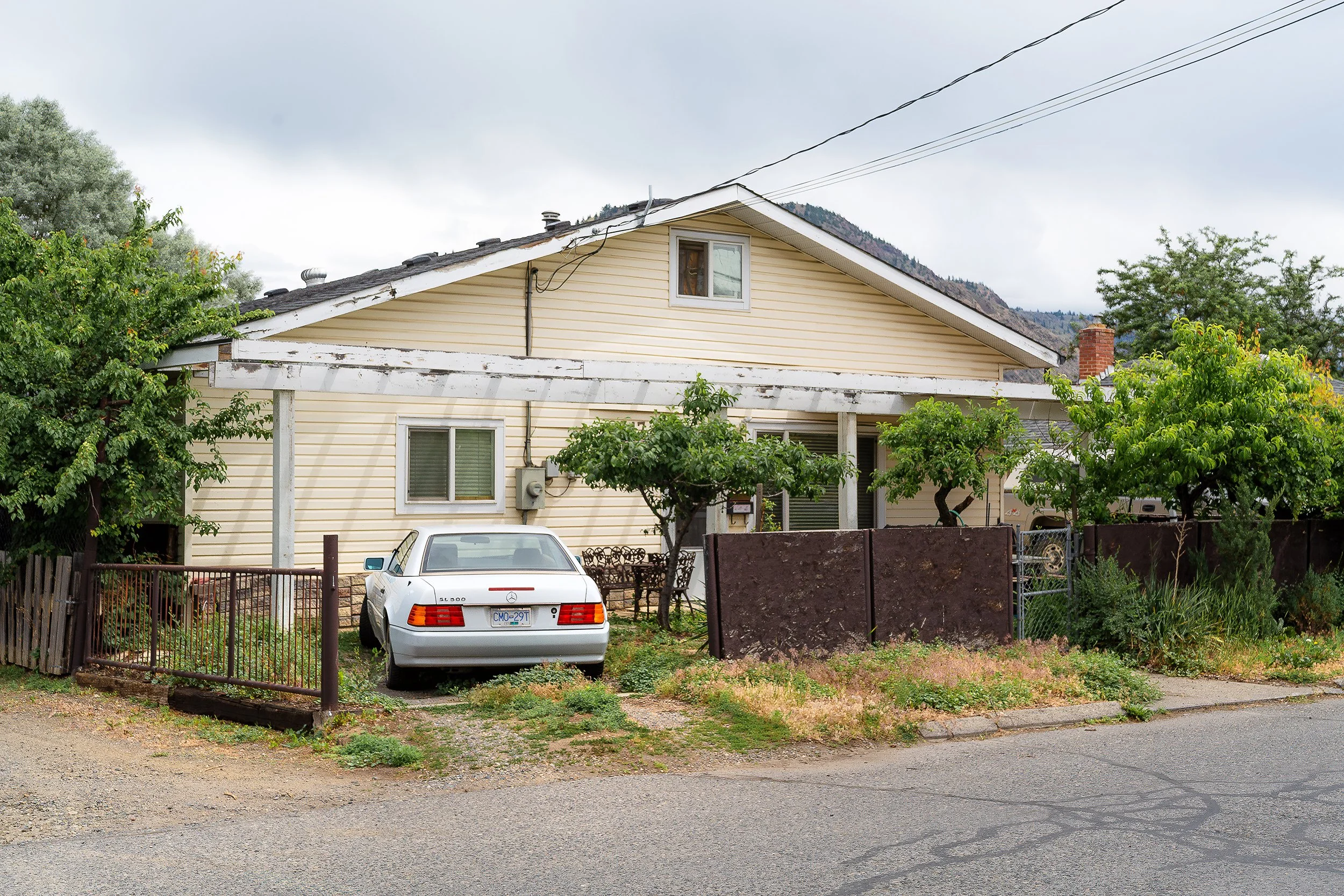
My favourite photos are really quite random. Cars on back roads, houses and structures that caught my eye, shop fronts, and the odd person just living their life.
And there was a time where that absolutely racked my brain. How can I visit somewhere so outstanding and be drawn to a photo of a bus? Has my photographic eye gone so astray that I prefer a photo of a car in front of a house over a crystal clear lake with reflections and autumn trees surrounding it?
That confusion went on for years, actually. But slowly I started to understand why I was drawn to such images that potentially hold less obvious beauty. And fast forward to the Canada trip — I had quite a solid grasp on why those types of images are almost always my favourite, no matter where I go in the world. Canada, in all its glory, confirmed my thoughts entirely.
The location is just the setting for the photo. It is never the point.
I want to break down exactly why that is, because there's a major takeaway here that changed how I look through a viewfinder — and I think it could do the same for you.
The Element of Surprise
The first big reason I love these random shots so much is the element of surprise.
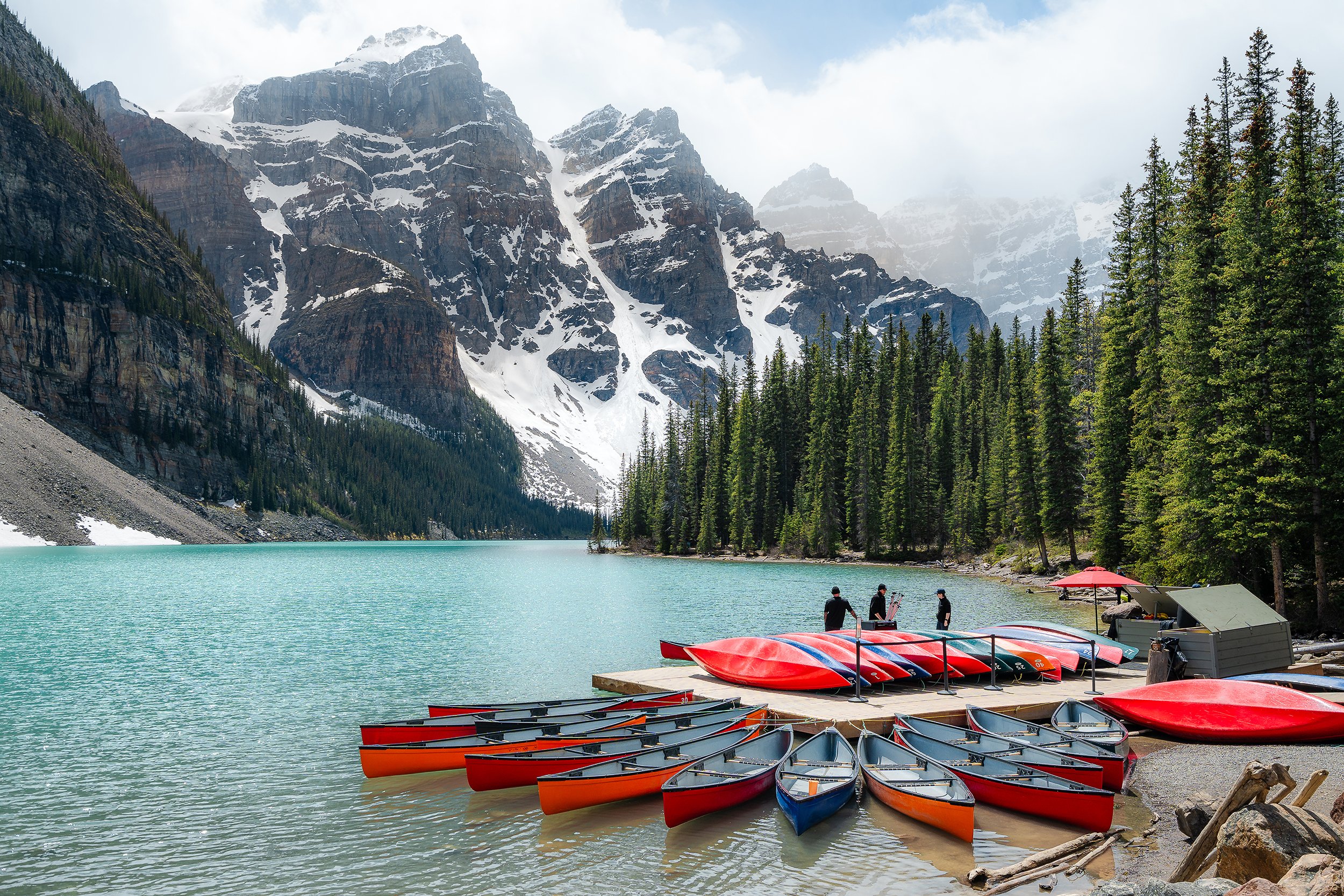
When you travel to somewhere iconic — let's take Moraine Lake (shot above), which I'd wanted to visit for over a decade — the surprise value when it comes to photos is essentially zero. You already know exactly where you're going and you've seen it online a million times.
It's still absolutely stunning, and I could have shed a little tear standing there seeing it in real life. But from a photography standpoint, there's no thrill of discovery. I still took a few photos, of course, but all I really cared about was enjoying being there rather than capturing a keeper.
In contrast, when you walk around a quiet town, down a back street early in the morning, and you spot an old car parked perfectly in front of a colourful building — the surprise value skyrockets. At least for me.
I didn't plan it. I'd never seen it before. It wasn't on a tourist map and it wasn't guaranteed. That feeling of finding a frame you really want to take, in a place where nobody told you to look, is an absolute rush. It makes the act of photographing feel less forced, less of a box-ticking exercise, and far more unique.
Speaking of unique — I think this is where the chance to create more original images lives. Not in the sense that nobody has ever taken a photo of an old car on a back street before, but more that those streets and ordinary buildings are the places people walk past every single day and completely ignore.
It's the act of a photographer not ignoring it that makes a photo entirely yours. And that does absolute wonders when it comes to feeling connected to your own work.
Now, having said all of that — you can absolutely still get that sense of discovery in an iconic tourist hotspot. I took some that gave me that feeling at Lake Louise, possibly the most visited place in the Rockies, but it was the random moments unfolding at that location, that I had to react to, that made me feel like I discovered the photo, rather than just standing in front of something thats already picture perfect. The image is very much focused on that random moment rather than just the beauty of a lake and landscape alone.
These little moments give you the chance to include an emotional trigger rather than just a beauty trigger.
The Human Trace and Absence
If you'll allow me to get a little deep for this next part — I mentioned emotional triggers at the end of the last section, and I think finding an emotion you genuinely like in photos, one you constantly look out for, is a fantastic way to go about making images.
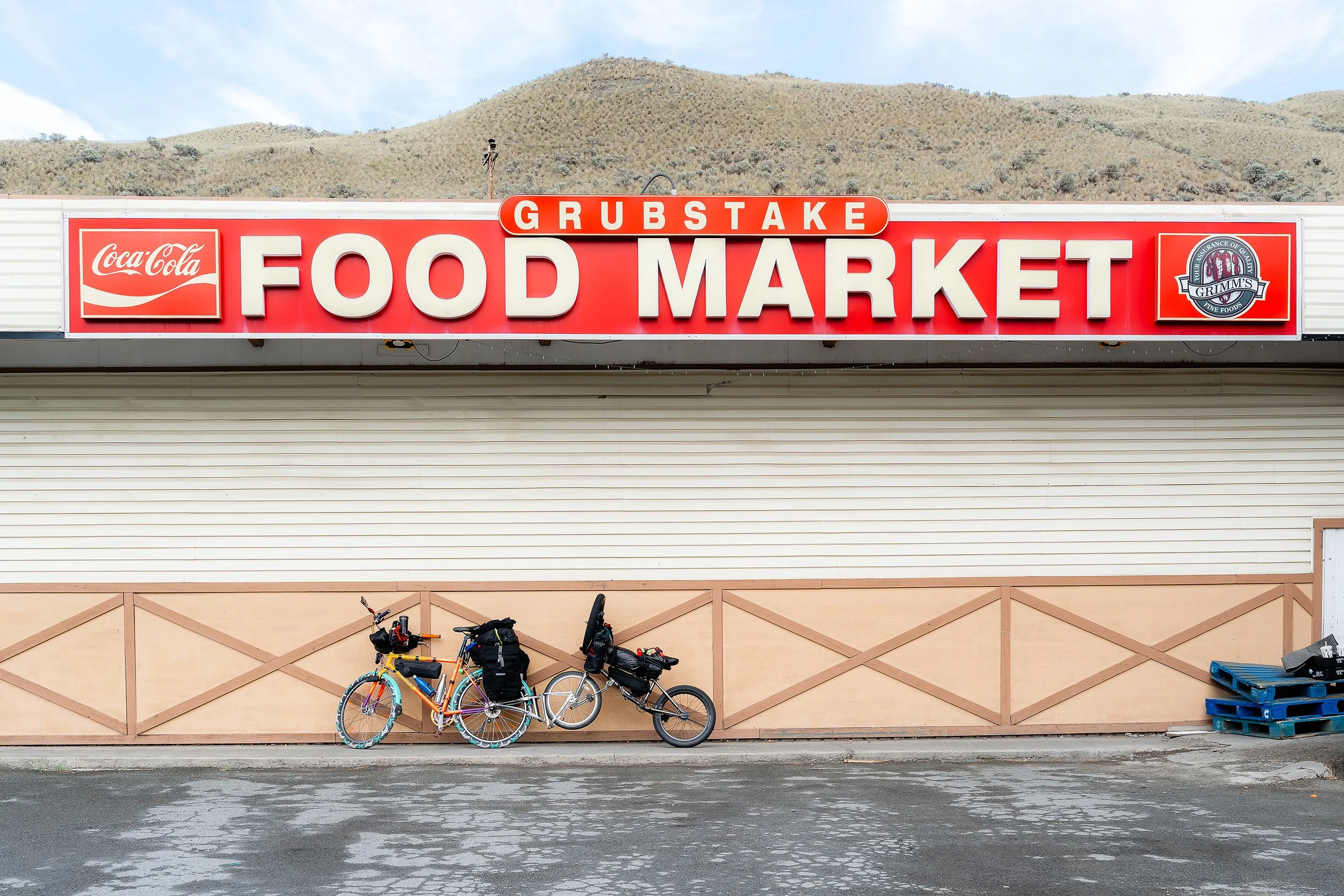
For me, the biggest and most constant emotional trigger is absence. Although many people might perceive it differently — and that's the beauty of photography — I'm besotted with capturing the feeling of isolation, the sense that something is missing, or just a trace of human activity when the scene itself is completely absent of people.
So although I call my favourite images random, because I stumbled across them or they might seem random in comparison to a famous lake, the intention behind them is actually quite specific.
The reason I find it so much easier to capture that feeling in these stumbled-upon photos is because their natural state is not to look epic or overwhelming. They don't scream beauty by default.
Many photographers do an absolute masterclass of a job capturing the sheer grandeur of an epic mountain range. That is an incredible skill. But for the specific itch I want to scratch, a massive, majestic landscape can actually be quite hard for me to work with. It's almost too beautiful, too loud — especially when there are no little nuances around that I can use, like traces of human activity, to become the main subject.
That doesn't mean I won't take those photos when I'm faced with them. They're just not the ones that end up being my favourite, because they're already beautiful. They say "what a beautiful view" rather than making me find beauty within something.
So with your own work — if you're struggling to inject feeling into your photography, and you look at it and think it's beautiful but where's the meaning, a good thing to do is to actually stop trying to pack the biggest, most complex punch into your frame.
Instead, focus on an emotion or a feeling. When you spot a scene that works for it, frame it up, cut out what doesn't add to it, and don't worry about it not being epic enough. An honest, simple photo is often more powerful than one trying to do everything at once.
The Location Is the Setting, Not the Point
Onto the biggest takeaway from all of this.
A pretty universal struggle most photographers have is finding photos — finding subject matter, or feeling stuck in your own environment, home town, or wherever it may be.
What I've spoken about throughout this piece — random photos, random moments, and emotional triggers — has helped me take more photos and better photos, anywhere I am or go, because I'm no longer just searching for textbook perfection on paper.
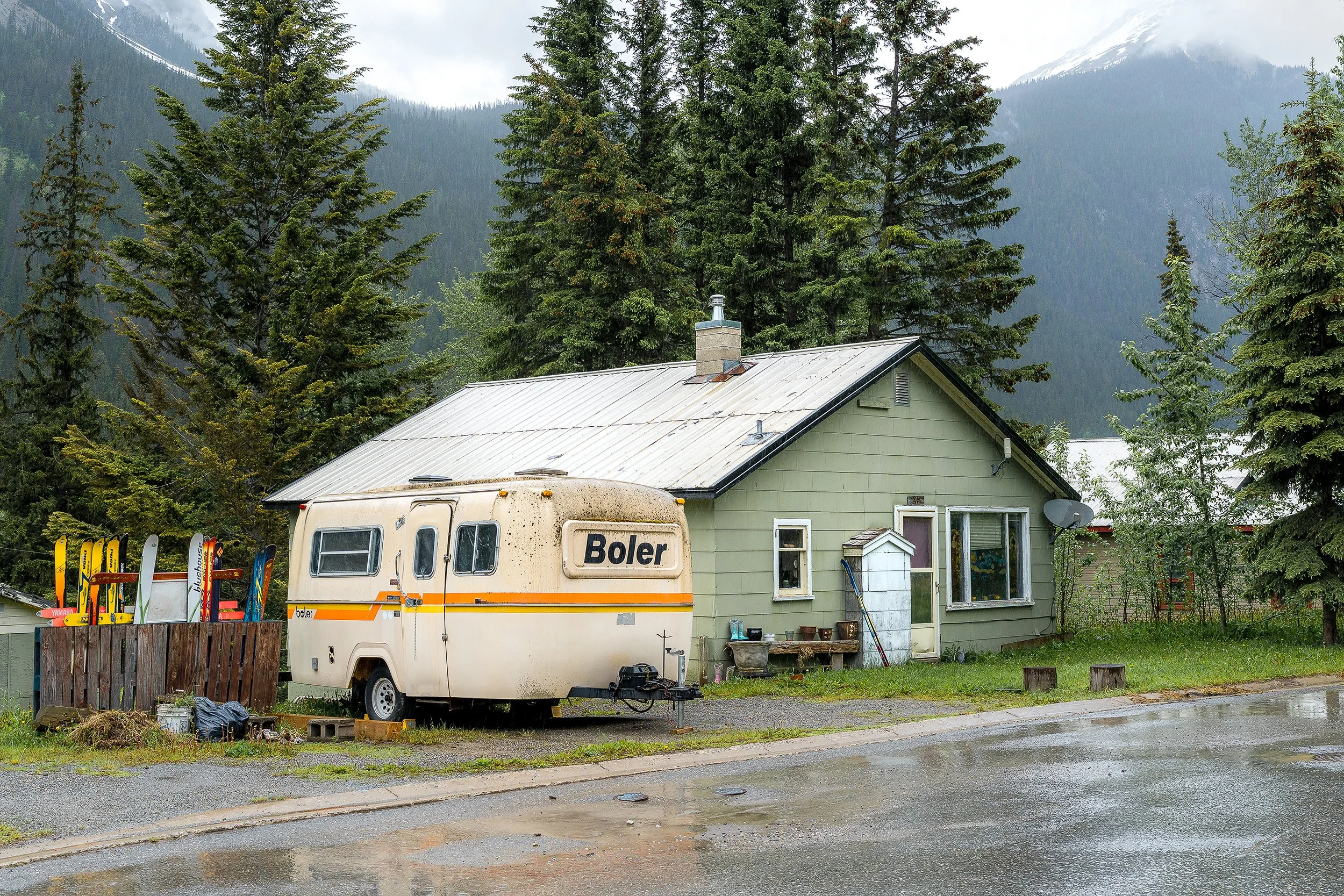
I've spent time walking around towns and industrial areas that would be described as pretty bleak or completely unappealing. But I feel like I can almost always grab at least a few frames I genuinely connect with, no matter where I am, because all locations essentially just become the setting for the photo rather than the point.
Even if the location or backdrop is beautiful — like a lot of the images from Canada — it's always secondary to the point of the photo.
In practice, this works two ways. Sometimes a scene is straight away making me feel a certain way. If a corner of a street feels a bit lonely, or slightly surreal, that is the photo. But it could also be something that jumps out at me first — a colour, a structure, anything like that — and then I'll work with it to try and make it feel a certain way.
That, I think, is really quite freeing. Because it means you're never really at the mercy of your location. The whole world opens up to you. Which might sound a bit extreme, but think about where you live right now — the towns or the countryside you know like the back of your hand — and then say to yourself, what if I shot a series of images in this area that feel haunting?
Suddenly, hopefully, you're looking at a familiar place with completely fresh eyes.
So although I still wish I could travel more, and I still want to experience as many places for photography as I can, I never really feel trapped by the fact I can't jump on a train or a plane whenever I want. With the mindset I've spoken about throughout this piece, I no longer feel like I need an epic or incredible location. I don't wait around for the next photography trip abroad. If I was told I could never leave Northumberland, the area I live in, I'd be absolutely fine creating work here forever.
And hopefully, this helps you feel the same way — if that is something you struggle with.


Professional, non-destructive Lightroom presets for RAW files.
The ‘Core Collection’ Lightroom Presets are designed to give you a range of beautiful starting points for your editing process across any genre of photography.
Unlike other Adobe Lightroom presets, these are designed to leave your basic adjustments and exposure values alone, allowing you to fine-tune your images without over-processing them.
Tried, tested, and optimised for RAW files across all major camera brands, this collection offers a selection of minimal, clean, natural and creative colour looks alongside timeless black and white options.
11 Presets for Adobe Lightroom and Camera RAW
2 Quick Adjust Film Grain Presets
Suitable for any genre of photography
Compatible with any camera model or brand
Non-destructive for retaining dynamic range